

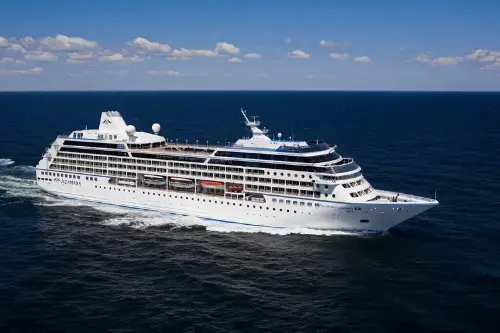
Sea cruise · 11.09.2026 – 25.09.2026 · 14 nights
14 nights, from Reykjavik
Route and cruise information
Premium- Reykjavik
- Reykjavik
- Prince Christian Sound
- Qaqortoq
- Nanortalik
- St. John's
- Saint-Pierre, Quebec
- Charlottetown
- Kangiqsualujjuaq
- Montreal
| Date | Port | Arrival | Departure |
|---|---|---|---|
| 11.09.2026 |
Reykjavik
Iceland
|
— | — |
| 12.09.2026 |
Reykjavik
Iceland
|
— | 17:00 |
| 13.09.2026 |
Day at sea
|
— | — |
| 14.09.2026 |
Prince Christian Sound
Greenland
|
13:00 | 18:00 |
| 15.09.2026 |
Qaqortoq
Greenland
|
08:00 | 20:00 |
| 16.09.2026 |
Nanortalik
Greenland
|
08:00 | 17:00 |
| 17.09.2026 |
Day at sea
|
— | — |
| 18.09.2026 |
Day at sea
|
— | — |
| 19.09.2026 |
St. John's
Canada
|
08:00 | 17:00 |
| 20.09.2026 |
Saint-Pierre, Quebec
Canada
|
08:00 | 14:00 |
| 21.09.2026 |
Charlottetown
Canada
|
13:00 | 22:00 |
| 22.09.2026 |
Day at sea
|
— | — |
| 23.09.2026 |
Day at sea
|
— | — |
| 24.09.2026 |
Kangiqsualujjuaq
Canada
|
08:00 | 17:00 |
| 25.09.2026 |
Montreal
Canada
|
07:00 | — |
-
 Day 1:
Reykjavik / Iceland
Reykjavík is the capital and largest city of Iceland. It is located in southwestern Iceland, on the southern shore of Faxa Bay. Its latitude is 64°08' N, making it the world's northernmost capital of a sovereign state. With a population of around 123,300 (and over 216,940 in the Capital Region), it is the heart of Iceland's cultural, economic and governmental activity, and is a popular tourist destination.
Reykjavík is believed to be the location of the first permanent settlement in Iceland, which, according to Ingólfr Arnarson, was established in AD 874. Until the 19th century, there was no urban development in the city location. The city was founded in 1786 as an official trading town and grew steadily over the following decades, as it transformed into a regional and later national centre of commerce, population, and governmental activities. It is among the cleanest, greenest, and safest cities in the world.
-
Day 2: 17:00
Reykjavik / Iceland
Reykjavík is the capital and largest city of Iceland. It is located in southwestern Iceland, on the southern shore of Faxa Bay. Its latitude is 64°08' N, making it the world's northernmost capital of a sovereign state. With a population of around 123,300 (and over 216,940 in the Capital Region), it is the heart of Iceland's cultural, economic and governmental activity, and is a popular tourist destination.
Reykjavík is believed to be the location of the first permanent settlement in Iceland, which, according to Ingólfr Arnarson, was established in AD 874. Until the 19th century, there was no urban development in the city location. The city was founded in 1786 as an official trading town and grew steadily over the following decades, as it transformed into a regional and later national centre of commerce, population, and governmental activities. It is among the cleanest, greenest, and safest cities in the world.
-
Day 3:
Day at sea / Sea
-
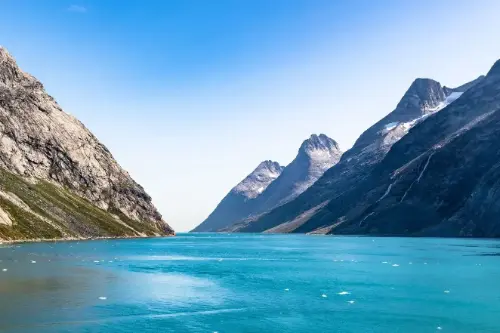 Day 4: 13:00–18:00
Prince Christian Sound / Greenland
The sea passage in southern Greenland captivates travelers with its breathtaking landscapes and unique Arctic atmosphere. Prince Christian Sound connects the Atlantic Ocean with the inner fjords, forming a narrow channel surrounded by majestic icy mountains and ancient glaciers. This strait is a perfect spot for those who want to immerse themselves in pristine nature and enjoy watching whales, seals, and seabirds. Every summer, cruise ships arrive here, offering passengers stunning views and a chance to experience the Arctic world up close. -
 Day 5: 08:00–20:00
Qaqortoq / Greenland
Qaqortoq, formerly Julianehåb, is a town in the Kujalleq municipality in southern Greenland, located near Cape Thorvaldsen. With a population of 3,089 in 2016, it is the most populous town in southern Greenland and the fourth-largest town on the island.
-
 Day 6: 08:00–17:00
Nanortalik / Greenland
Nanortalik is a town in Nanortalik Island, Kujalleqmunicipality, southern Greenland. With 1,337 inhabitants as of 2013, it is the tenth-largest town in the country. The name Nanortalik means "Place of Polar Bears" or "Place Where the Polar Bears Go" (from Greenlandic: nanoq). It is the southernmost town in Greenland, with a population of over 1,000.
-
Day 7:
Day at sea / Sea
-
Day 8:
Day at sea / Sea
-
 Day 9: 08:00–17:00
St. John's / Canada
St. John's is the capital and largest city of the Canadian province of Newfoundland and Labrador. It is on the eastern tip of the Avalon Peninsula on the large Canadian island, Newfoundland. The city spans 446.04 square kilometres (172.22 sq mi) and is North America's easternmost city.
Its name has been attributed to the Nativity of John the Baptist, when John Cabot was believed to have sailed into the harbour in 1497 and to a Basque fishing town with the same name. Existing on maps as early as 1519, it is the oldest city in North America. It was officially incorporated as a city in 1888. With a metropolitan population of approximately 219,207 (as of July 1, 2017), the St. John's Metropolitan Area is Canada's 20th largest metropolitan area and the second largest Census Metropolitan Area (CMA) in Atlantic Canada, after Halifax.
The city has a rich history, having played a role in the French and Indian War, the American Revolutionary War, and the War of 1812. Italian inventor Guglielmo Marconi received the first transatlantic wireless signal in St. John's. Its history and culture have made it into an important tourist destination.
-
 Day 10: 08:00–14:00
Saint-Pierre, Quebec / Canada
Nestled on the banks of the Saint Lawrence River, Saint-Pierre, Quebec welcomes visitors with its calm atmosphere and warm hospitality. This small town is known for its historic architecture and colorful houses that carefully preserve the spirit of bygone centuries. Here, you can take a leisurely stroll through the streets, enjoying views of the river and the aroma of fresh pastries wafting from local bakeries.
Saint-Pierre, Quebec is also renowned for its cultural events and festivals that attract tourists year-round. Locals are happy to share stories and traditions, creating an unforgettable atmosphere for every traveler. Whether you’re looking for a cozy retreat or a cultural adventure, this town will surprise you with its warmth and charm.
-
 Day 11: 13:00–22:00
Charlottetown / Canada
Charlottetown is the capital and largest city of the Canadian province of Prince Edward Island, and the county seat of Queens County. Named after Charlotte of Mecklenburg-Strelitz, queen consort of King George III of the United Kingdom, Charlottetown was originally an unincorporated town that incorporated as a city in 1855.
It was famously the site of the Charlottetown Conference in 1864, the first gathering of Canadian and Maritimestatesmen to debate the proposed Maritime Union and the more persuasive British North American Union, now known as Canadian Confederation. From this, the city adopted as its motto Cunabula Foederis—"Birthplace of Confederation".
The population of Charlottetown in the 2016 census was 36,094;[7] this forms the centre of a census agglomeration of 69,325, which is slightly less than half of the province's population (142,907).
-
Day 12:
Day at sea / Sea
-
Day 13:
Day at sea / Sea
-
 Day 14: 08:00–17:00
Kangiqsualujjuaq / Canada
-
 Day 15: 07:00
Montreal / Canada
Montreal — The Cultural Capital of Canada
Montreal is the largest city in the province of Quebec in southeastern Canada and the fourth-largest French-speaking city in the world, behind Paris, Kinshasa, and Abidjan. It is an important cultural center where French and English cultures harmoniously blend. Walking through the Old City, Vieux-Montréal, you can admire beautiful old buildings, narrow streets, and historic squares, such as Place Jacques-Cartier. Montreal is also famous for its museums, theaters, and festivals, including the famous jazz festival.
The city perfectly combines urban atmosphere with natural beauty. In Montreal, you can enjoy green parks like Parc Jean-Drapeau and hike up Mont Royal, from where you get a stunning view of the city. Montreal is also renowned for its gastronomy, offering a variety of restaurants, from French cuisine to unique street food.
Frequently asked questions
We recommend flying in the day before the cruise begins.
- Arrive at the port 2–3 hours before departure.
- When booking an airport–port transfer, allow at least 5 hours between landing and the scheduled sailing.
Still have a question?
We'll help you choose a cruise and answer your questions.