

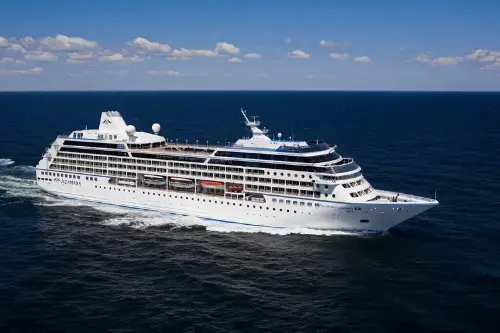
Sea cruise · 14.01.2027 – 17.02.2027 · 34 nights
34 nights, from Miami
Cabin prices and availabilityRoute and cruise information
Premium- Miami
- Bandol
- Charlotte Amalie, Fr. St. Thomas
- PHILIPSBURG
- Charlestown
- St. John`s
- Saint Pierre and Miquelon
- Port Elizabeth, Bequia
- St. George`s
- Bridgetown
- Scarborough
- Royal Oak
- Belen
- Recife
- Salvador
- Bandol
- Armacao dos Buzios
- Rio de Janeiro
- Rio de Janeiro
- Rio de Janeiro
- Paraty
- Ilhabela
- Santos
- Montevideo
- Buenos Aires
- Buenos Aires
| Date | Port | Arrival | Departure |
|---|---|---|---|
| 14.01.2027 |
Miami
USA
|
— | 17:00 |
| 15.01.2027 |
Day at sea
|
— | — |
| 16.01.2027 |
Day at sea
|
— | — |
| 17.01.2027 |
Bandol
France
|
10:30 | 18:00 |
| 18.01.2027 |
Charlotte Amalie, Fr. St. Thomas
Virgin Islands
|
08:00 | 18:00 |
| 19.01.2027 |
PHILIPSBURG
Anguilla
|
08:00 | 22:00 |
| 20.01.2027 |
Charlestown
Saint Kitts and Nevis
|
08:00 | 18:00 |
| 21.01.2027 |
St. John`s
|
08:00 | 18:00 |
| 22.01.2027 |
Saint Pierre and Miquelon
France
|
08:00 | 20:00 |
| 23.01.2027 |
Port Elizabeth, Bequia
Saint Vincent and the Grenadines
|
08:00 | 20:00 |
| 24.01.2027 |
St. George`s
|
08:00 | 17:00 |
| 25.01.2027 |
Bridgetown
Barbados
|
06:00 | 18:00 |
| 26.01.2027 |
Scarborough
Trinidad and Tobago
|
08:00 | 14:00 |
| 27.01.2027 |
Day at sea
|
— | — |
| 28.01.2027 |
Royal Oak
|
08:00 | 15:00 |
| 29.01.2027 |
Day at sea
|
— | — |
| 30.01.2027 |
Belen
Brazil
|
08:00 | 17:00 |
| 31.01.2027 |
Day at sea
|
— | — |
| 01.02.2027 |
Day at sea
|
— | — |
| 02.02.2027 |
Recife
Brazil
|
13:00 | 22:00 |
| 03.02.2027 |
Day at sea
|
— | — |
| 04.02.2027 |
Salvador
Brazil
|
08:00 | 18:00 |
| 05.02.2027 |
Day at sea
|
— | — |
| 06.02.2027 |
Bandol
France
|
13:00 | 15:00 |
| 07.02.2027 |
Armacao dos Buzios
Brazil
|
16:00 | 22:00 |
| 08.02.2027 |
Rio de Janeiro
Brazil
|
08:00 | — |
| 09.02.2027 |
Rio de Janeiro
Brazil
|
— | — |
| 10.02.2027 |
Rio de Janeiro
Brazil
|
— | 17:00 |
| 11.02.2027 |
Paraty
Brazil
|
08:00 | 18:00 |
| 12.02.2027 |
Ilhabela
Brazil
|
08:00 | 18:00 |
| 13.02.2027 |
Santos
Brazil
|
08:00 | 18:00 |
| 14.02.2027 |
Day at sea
|
— | — |
| 15.02.2027 |
Day at sea
|
— | — |
| 16.02.2027 |
Montevideo
Uruguay
|
08:00 | 18:00 |
| 17.02.2027 |
Buenos Aires
Argentina
|
08:00 | — |
| 18.02.2027 |
Buenos Aires
Argentina
|
09:00 | — |
-
 Day 1: 17:00
Miami / USA
Miami, officially the City of Miami, is the cultural, economic and financial center of South Florida. Miami is the seat of Miami-Dade County, the most populous county in Florida. The city covers an area of about 56.6 square miles (147 km2), between the Everglades to the west and Biscayne Bay on the east; with a 2017 estimated population of 463,347, Miami is the sixth most densely populated major city in the United States. The Miami metropolitan area is home to 6.1 million people and the seventh-largest metropolitan area in the nation. Miami's metro area is the second-most populous metropolis in the southeastern United States and fourth-largest urban area in the U.S.
Miami is a major center, and a leader in finance, commerce, culture, media, entertainment, the arts, and international trade. The Miami Metropolitan Area is by far the largest urban economy in Florida and the 12th largest in the United States with a GDP of $344.9 billion as of 2017. In 2012, Miami was classified as an "Alpha−" level world city in the World Cities Study Group's inventory. In 2010, Miami ranked seventh in the United States and 33rd among global cities in terms of business activity, human capital, information exchange, cultural experience, and political engagement. In 2008, Forbes magazine ranked Miami "America's Cleanest City", for its year-round good air quality, vast green spaces, clean drinking water, clean streets, and citywide recycling programs. According to a 2009 UBS study of 73 world cities, Miami was ranked as the richest city in the United States, and the world's seventh-richest city in terms of purchasing power. Miami is nicknamed the "Capital of Latin America" and is the largest city with a Cuban-American plurality.
Greater Downtown Miami has one of the largest concentrations of international banks in the United States, and is home to many large national and international companies. The Civic Center is a major center for hospitals, research institutes, medical centers, and biotechnology industries. For more than two decades, the Port of Miami, known as the "Cruise Capital of the World", has been the number one cruise passenger port in the world. It accommodates some of the world's largest cruise ships and operations, and is the busiest port in both passenger traffic and cruise lines. Metropolitan Miami is also a major tourism hub in the southeastern U.S. for international visitors, ranking number two in the country after New York City.
-
Day 2:
Day at sea / Sea
-
Day 3:
Day at sea / Sea
-
 Day 4: 10:30–18:00
Bandol / France
Bandol is a commune in Var department, Provence-Alpes-Côte d'Azur region, southeastern France. Bandol and the seat of its eponymous commune, was founded in 1595 and built around a small military fort.
The Bandol wine region, located near the coast east of Marseille and Cassis, is one of Provence’s most internationally recognized wine regions. Built around the village of Bandol, west of Toulon, the Bandol AOC covers the production of 8 communes with silicon & limestone soils. Those soils and the warm, coastal climate are ideally suited for the late ripening Mourvèdre grape which is the major variety of the region. For both the red and rosé wines, Mourvèdre must account for at least 50% of the blend, though most producers will use significantly more, with Grenache & Cinsaut usually filling out the rest of the wine’s composition.
-
 Day 5: 08:00–18:00
Charlotte Amalie, Fr. St. Thomas / Virgin Islands
-
Day 6: 08:00–22:00
PHILIPSBURG / Anguilla
-
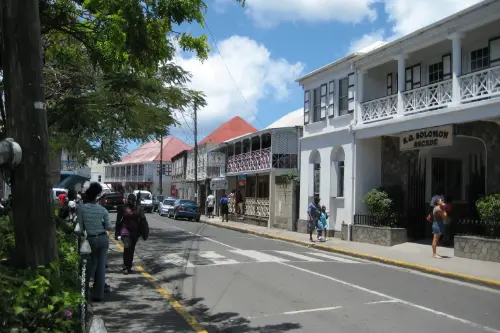 Day 7: 08:00–18:00
Charlestown / Saint Kitts and Nevis
Charlestown
-
Day 8: 08:00–18:00
St. John`s
-
 Day 9: 08:00–20:00
Saint Pierre and Miquelon / France
Saint Pierre and Miquelon is a tiny French archipelago located off the coast of Canada’s Newfoundland and Labrador province. It's the last remnant of French territory in North America, where the euro is used, French laws apply, and streets feel distinctly European—with bakeries, baguettes, and colorful houses set against the rugged North Atlantic backdrop.
The archipelago includes two main islands—lively Saint Pierre and the wilder, more spacious Miquelon. Visitors can witness whale migrations, hike scenic trails, or explore on bikes and snowshoes. A curious fact: during the U.S. Prohibition era, Saint Pierre served as a key hub for alcohol smuggling, a story still told in the local museum.
-
 Day 10: 08:00–20:00
Port Elizabeth, Bequia / Saint Vincent and the Grenadines
Travelers seeking tranquility and authentic Caribbean charm will find their refuge on the shores of Port Elizabeth, Bequia. This picturesque port town offers cozy streets lined with vibrant colonial houses and a friendly atmosphere that preserves the spirit of genuine island life. Here, you can feel the rhythms of traditional music, taste fresh seafood, and enjoy a leisurely pace of life.
Away from tourist crowds, Port Elizabeth, Bequia is famous for its golden sandy beaches and crystal-clear turquoise waters, perfect for swimming and snorkeling. The surrounding nature invites exploration of green hills and tropical forests, while local artisans offer unique souvenirs reflecting the island’s cultural heritage. It’s an ideal place for those who want to combine relaxation with immersion in the authentic Caribbean atmosphere.
-
Day 11: 08:00–17:00
St. George`s
-
 Day 12: 06:00–18:00
Bridgetown / Barbados
Bridgetown is the capital and largest city of Barbados. Formerly The Town of Saint Michael, the Greater Bridgetown area is located within the parish of Saint Michael. Bridgetown is sometimes locally referred to as "The City", but the most common reference is simply "Town". As of 2014, its metropolitan population stands at roughly 110,000.
The Bridgetown port, found along Carlisle Bay (at 13.106°N 59.632°W) lies on the southwestern coast of the island. Parts of the Greater Bridgetown area (as roughly defined by the Ring Road Bypass or more commonly known as the ABC Highway), sit close to the borders of the neighbouring parishes Christ Church and St. James. The Grantley Adams International Airport for Barbados, is located 16 kilometres (10 mi) southeast of Bridgetown city centre, and has daily flights to major cities in the United Kingdom, United States, Canada and the Caribbean. There is no longer a local municipal government, but it is a constituency of the national Parliament. During the short-lived 1950s-1960s Federation of the British West Indian Territories, Bridgetown was one of three capital cities within the region being considered to be the Federal capital of region.
The present-day location of the city was established by English settlers in 1628; a previous settlement under the authority of Sir William Courten was at St. James Town. Bridgetown is a major West Indies tourist destination, and the city acts as an important financial, informatics, convention centre, and cruise ship port of call in the Caribbean region. On 25 June 2011, "Historic Bridgetown and its Garrison" was added as a World Heritage Site of UNESCO.
-
 Day 13: 08:00–14:00
Scarborough / Trinidad and Tobago
Scarborough (Tobago) is a charming town located on the eastern coast of the island of Tobago in the Caribbean Sea. As the capital of the island, it serves as the cultural and historical heart of Tobago. The town is known for its picturesque streets, vibrant markets, and old buildings that blend harmoniously with modern architecture. One of the main landmarks is the historic St. Anne’s Church, built in 1770, which remains an important part of the town’s heritage. Visitors are also drawn to the local market, where fresh fruits, spices, and handmade crafts showcase the island’s rich traditions.
Beyond its cultural and historical appeal, Scarborough offers travelers stunning natural surroundings. Nearby beaches with white sand and crystal-clear waters are perfect for swimming and diving. Pleasant Bay, popular among tourists, offers scenic views and a colorful underwater world. Scarborough is also an ideal base for exploring Tobago’s nature reserves and enjoying active outdoor adventures.
-
Day 14:
Day at sea / Sea
-
Day 15: 08:00–15:00
Royal Oak
-
Day 16:
Day at sea / Sea
-
Day 17: 08:00–17:00
Belen / Brazil
-
Day 18:
Day at sea / Sea
-
Day 19:
Day at sea / Sea
-
 Day 20: 13:00–22:00
Recife / Brazil
Recife: The Tropical Venice of Brazil
Recife, the capital of Pernambuco in northeastern Brazil, is known for its network of canals, bridges, and rivers, earning it the nickname “Brazilian Venice.” The city blends colonial architecture, modern skyscrapers, and vibrant culture, reflected in its carnival, frevo music, and maracatu rhythms. The historic district, Recife Antigo, preserves the city's Portuguese heritage through narrow streets, churches, and old buildings.Recife is also famous for its beaches, especially Boa Viagem, where white sand and palm trees contrast with the urban skyline. Visitors can explore museums like the Ricardo Brennand Institute, with its collection of weapons and art, or visit the nearby colonial town of Olinda, a UNESCO World Heritage Site. It’s the perfect destination for those seeking cultural immersion, seaside relaxation, and the rhythm of vibrant Brazil.
-
Day 21:
Day at sea / Sea
-
 Day 22: 08:00–18:00
Salvador / Brazil
Salvador is the capital of Bahia state and was formerly the first capital of Brazil. Salvador is known for its endless number of churches, as well as for being a land of majestic fortresses. After visiting these places, it is also worth taking a look at the Chapada Diamantina National Park – the most interesting natural park in Brazil. In Salvador, there reigns an atmosphere of joy, revelry, and holidays – this is due to the fact that the local population was influenced by Africa. In Salvador, you can always admire the natural beauty of this area. You will be enchanted by the sensuality of this land, and you will be able to discover a piece of its mysterious power.
-
Day 23:
Day at sea / Sea
-
Day 24: 13:00–15:00
Bandol / France
Bandol is a commune in Var department, Provence-Alpes-Côte d'Azur region, southeastern France. Bandol and the seat of its eponymous commune, was founded in 1595 and built around a small military fort.
The Bandol wine region, located near the coast east of Marseille and Cassis, is one of Provence’s most internationally recognized wine regions. Built around the village of Bandol, west of Toulon, the Bandol AOC covers the production of 8 communes with silicon & limestone soils. Those soils and the warm, coastal climate are ideally suited for the late ripening Mourvèdre grape which is the major variety of the region. For both the red and rosé wines, Mourvèdre must account for at least 50% of the blend, though most producers will use significantly more, with Grenache & Cinsaut usually filling out the rest of the wine’s composition.
-
 Day 25: 16:00–22:00
Armacao dos Buzios / Brazil
Armação dos Búzios, often referred to as just Búzios, is a resort town and a municipality located in the state of Rio de Janeiro, Brazil. In 2012, its population consisted of 23,463 inhabitants and its area of 69 km². Today, Búzios is a popular getaway from the city and a worldwide tourist site, especially among Brazilians and Argentinians.
In the early 1900s Búzios was an almost unknown village of fishermen. It remained as such until 1964, when the French actress Brigitte Bardot visited Búzios, since then Búzios became popular with the Carioca’s high society, who wanted to escape from the chaotic city life of Rio de Janeiro and enjoy over 23 beaches that the peninsula offers. The city grew to be an international tourist destination.
Today, the peninsula is a travelling site that offers calmness, direct contact with nature and scenic views. The west coast beaches offer calm, clear waters while the east coast ones, facing the open sea, are more wild and draw surfers and water sports enthusiasts. Azeda, Ferradura, João Fernandes and Armação are amongst the most popular beaches in town. At night, Rua das Pedras, Buzios' main street, offers its visitors an active nightlife and a great variety of shopping and restaurants.
-
 Day 26: 08:00
Rio de Janeiro / Brazil
Rio de Janeiro is the second-most populous municipality in Brazil and the sixth-most populous in the Americas. The metropolis is anchor to the Rio de Janeiro metropolitan area, the second-most populous metropolitan area in Brazil and sixth-most populous in the Americas. Rio de Janeiro is the capital of the state of Rio de Janeiro, Brazil's third-most populous state. Part of the city has been designated as a World Heritage Site, named "Rio de Janeiro: CariocaLandscapes between the Mountain and the Sea", by UNESCO on 1 July 2012 as a Cultural Landscape.
Founded in 1565 by the Portuguese, the city was initially the seat of the Captaincy of Rio de Janeiro, a domain of the Portuguese Empire. Later, in 1763, it became the capital of the State of Brazil, a state of the Portuguese Empire. In 1808, when the Portuguese Royal Court transferred itself from Portugal to Brazil, Rio de Janeiro became the chosen seat of the court of Queen Maria I of Portugal, who subsequently, in 1815, under the leadership of her son, the Prince Regent, and future King João VI of Portugal, raised Brazil to the dignity of a kingdom, within the United Kingdom of Portugal, Brazil, and Algarves. Rio stayed the capital of the pluricontinental Lusitanian monarchy until 1822, when the War of Brazilian Independence began. This is one of the few instances in history that the capital of a colonising country officially shifted to a city in one of its colonies. Rio de Janeiro subsequently served as the capital of the independent monarchy, the Empire of Brazil, until 1889, and then the capital of a republican Brazil until 1960 when the capital was transferred to Brasília.
-
Day 27:
Rio de Janeiro / Brazil
Rio de Janeiro is the second-most populous municipality in Brazil and the sixth-most populous in the Americas. The metropolis is anchor to the Rio de Janeiro metropolitan area, the second-most populous metropolitan area in Brazil and sixth-most populous in the Americas. Rio de Janeiro is the capital of the state of Rio de Janeiro, Brazil's third-most populous state. Part of the city has been designated as a World Heritage Site, named "Rio de Janeiro: CariocaLandscapes between the Mountain and the Sea", by UNESCO on 1 July 2012 as a Cultural Landscape.
Founded in 1565 by the Portuguese, the city was initially the seat of the Captaincy of Rio de Janeiro, a domain of the Portuguese Empire. Later, in 1763, it became the capital of the State of Brazil, a state of the Portuguese Empire. In 1808, when the Portuguese Royal Court transferred itself from Portugal to Brazil, Rio de Janeiro became the chosen seat of the court of Queen Maria I of Portugal, who subsequently, in 1815, under the leadership of her son, the Prince Regent, and future King João VI of Portugal, raised Brazil to the dignity of a kingdom, within the United Kingdom of Portugal, Brazil, and Algarves. Rio stayed the capital of the pluricontinental Lusitanian monarchy until 1822, when the War of Brazilian Independence began. This is one of the few instances in history that the capital of a colonising country officially shifted to a city in one of its colonies. Rio de Janeiro subsequently served as the capital of the independent monarchy, the Empire of Brazil, until 1889, and then the capital of a republican Brazil until 1960 when the capital was transferred to Brasília.
-
Day 28: 17:00
Rio de Janeiro / Brazil
Rio de Janeiro is the second-most populous municipality in Brazil and the sixth-most populous in the Americas. The metropolis is anchor to the Rio de Janeiro metropolitan area, the second-most populous metropolitan area in Brazil and sixth-most populous in the Americas. Rio de Janeiro is the capital of the state of Rio de Janeiro, Brazil's third-most populous state. Part of the city has been designated as a World Heritage Site, named "Rio de Janeiro: CariocaLandscapes between the Mountain and the Sea", by UNESCO on 1 July 2012 as a Cultural Landscape.
Founded in 1565 by the Portuguese, the city was initially the seat of the Captaincy of Rio de Janeiro, a domain of the Portuguese Empire. Later, in 1763, it became the capital of the State of Brazil, a state of the Portuguese Empire. In 1808, when the Portuguese Royal Court transferred itself from Portugal to Brazil, Rio de Janeiro became the chosen seat of the court of Queen Maria I of Portugal, who subsequently, in 1815, under the leadership of her son, the Prince Regent, and future King João VI of Portugal, raised Brazil to the dignity of a kingdom, within the United Kingdom of Portugal, Brazil, and Algarves. Rio stayed the capital of the pluricontinental Lusitanian monarchy until 1822, when the War of Brazilian Independence began. This is one of the few instances in history that the capital of a colonising country officially shifted to a city in one of its colonies. Rio de Janeiro subsequently served as the capital of the independent monarchy, the Empire of Brazil, until 1889, and then the capital of a republican Brazil until 1960 when the capital was transferred to Brasília.
-
 Day 29: 08:00–18:00
Paraty / Brazil
-
 Day 30: 08:00–18:00
Ilhabela / Brazil
Ilhabela — A Brazilian Paradise for Nature and Adventure Enthusiasts
Ilhabela is a picturesque archipelago and municipality in the state of São Paulo, Brazil, comprising the main island and several smaller ones. The name translates from Portuguese as "beautiful island," which it truly embodies. Over 80% of the island's territory is protected within the Ilhabela State Park, featuring dense tropical forests, waterfalls, and hiking trails. It's a popular destination for sailors, divers, and those seeking solitude away from urban noise.
Ilhabela is renowned not only for its golden sandy beaches and clear waters but also for the unique opportunity to observe whales during their migration. The city frequently hosts sailing regattas, including international competitions. Tourists can explore colonial-era buildings and enjoy the ambiance of seaside restaurants offering fresh seafood dishes. Ilhabela combines pristine nature, active recreation, and a relaxed pace of life, making it an ideal destination for travel at any time of the year.
-
 Day 31: 08:00–18:00
Santos / Brazil
-
Day 32:
Day at sea / Sea
-
Day 33:
Day at sea / Sea
-
 Day 34: 08:00–18:00
Montevideo / Uruguay
Montevideo is the capital and largest city of Uruguay. According to the 2011 census, the city proper has a population of 1,319,108 (about one-third of the country's total population) in an area of 201 square kilometres (78 sq mi). The southernmost capital city in the Americas, Montevideo is situated on the southern coast of the country, on the northeastern bank of the Río de la Plata.
The city was established in 1724 by a Spanish soldier, Bruno Mauricio de Zabala, as a strategic move amidst the Spanish-Portuguese dispute over the platine region. It was also under brief British rule in 1807. Montevideo is the seat of the administrative headquarters of Mercosur and ALADI, Latin America’s leading trade blocs, a position that entailed comparisons to the role of Brussels in Europe.
-
 Day 35: 08:00
Buenos Aires / Argentina
the capital city and chief port of Argentina, in the eastern central part of the country, on the Plata River; population 3,042,600 (est. 2008).
-
Day 36: 09:00
Buenos Aires / Argentina
the capital city and chief port of Argentina, in the eastern central part of the country, on the Plata River; population 3,042,600 (est. 2008).
Please wait…
Still have a question?
We'll help you choose a cruise and answer your questions.